5 Best Card Games for Logic and Strategy
Card games test very different kinds of thinking. Some are built around probability and reading other players, others reward memory, careful sequencing, or timing a good hand at the right moment. A few even ask you to piece together hidden information before anyone else does.
This list deliberately mixes classic card games with a modern online deduction game, rather than five near-identical titles. Each one rewards a different way of thinking at the table.

What Makes a Card Game Strategic?
Strategy in a card game rarely comes from one source. It can mean playing with incomplete information, remembering what's already been played, calculating rough probabilities, managing a hand efficiently, or timing an action for the right moment. Predicting what an opponent is likely to do, and planning a few turns ahead instead of just the current one, matters just as much as the cards themselves. With that in mind, here's the list.
#1 The Alibi
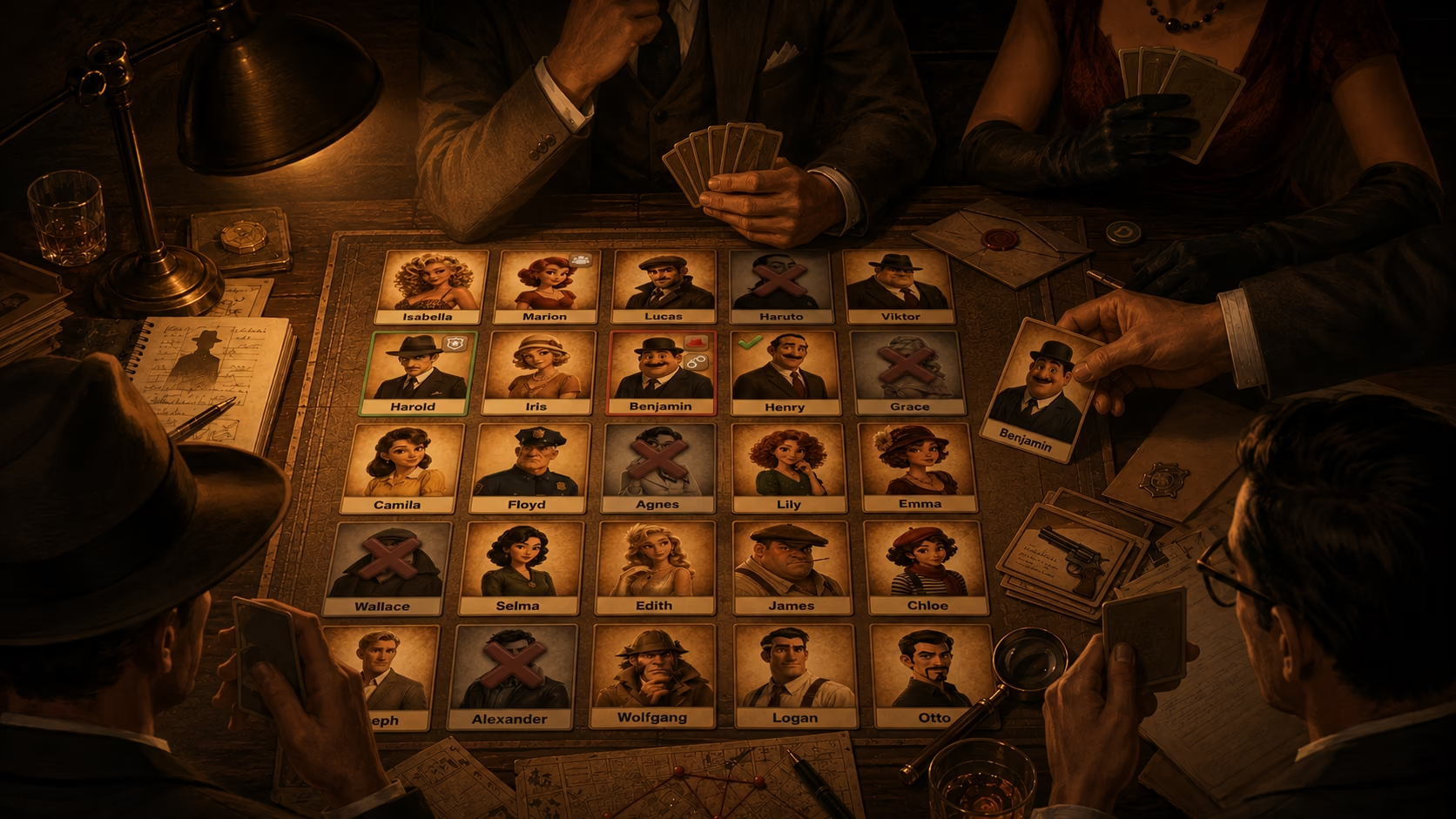
Alibi is a free online noir deduction card game you can play directly in the browser. It tops this list not because any one skill it tests is unique, but because a single match asks for several of them at once.
- Memory - you track characters, revealed information, and earlier actions; something from several turns back can still matter now.
- Planning several moves ahead - a move matters for the position it sets up, not just what it does immediately, including how your opponent is likely to respond.
- Deduction and hidden information - you rarely see the full picture, so you narrow down possibilities from revealed information, past moves, and how the board changes.
- Prediction - the opponent is deciding things too, so part of the game is guessing what they're trying to accomplish and adjusting your plan around it.
- Tactical positioning - where cards or characters sit changes what's possible next, adding a board-game layer on top of the card mechanics.
- Adaptation - a good plan can weaken the moment the other player acts, so you're constantly updating your read on the match.
Different modes and roles shift which of these matters most in a given match. You can play against other people or AI bots, so a match is available even when nobody else is around. It's free to try, runs in the browser, and needs no physical deck.
Best for: Memory, deduction and planning ahead
#2 Poker
Poker is a strategy card game built on incomplete information. Nobody can see an opponent's hole cards, so decisions rely on probability, reading behavior, and weighing risk against reward rather than certainty.
Bluffing works because betting is also information: a confident bet can represent real strength or a well-timed bluff, and reading which one you're facing is most of the skill. Good players constantly estimate what range of hands an opponent could realistically hold, then decide whether the pot is worth the risk.
Unlike a perfect-information game, there's no way to play Poker correctly and guarantee a result - the best you can do is make the statistically sound decision and accept the variance that comes with it.
Best for: Probability, bluffing and reading opponents

#3 Solitaire
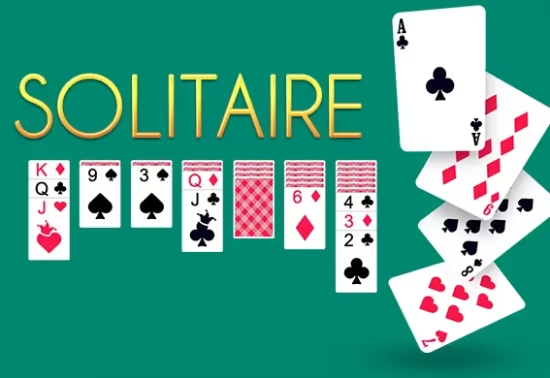
Classic Solitaire, usually Klondike, is a single-player exercise in sequencing and planning. You build tableau columns by alternating colors in descending order while moving cards toward the foundations, and every move changes which cards become available next.
The challenge is entirely about managing limited information: deciding which face-down card to reveal, when to commit to a sequence, and how one move now affects your options several moves later. There's no opponent to read - just the deal in front of you, and not every deal can actually be solved.
Best for: Sequencing and planning
#4 UNO
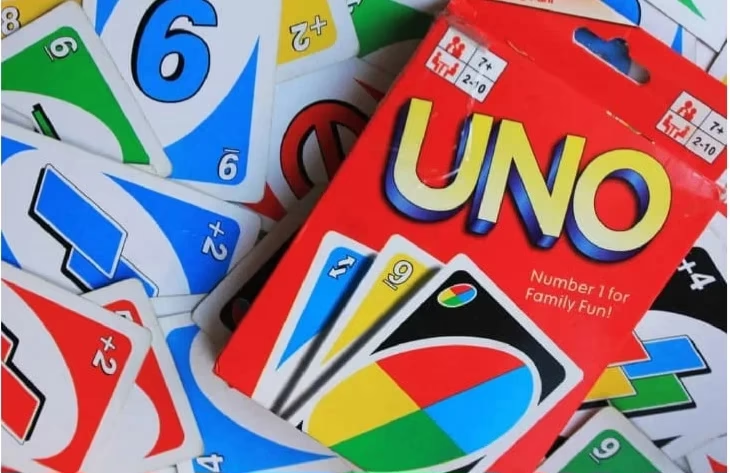
UNO is far simpler than the rest of this list, but it isn't purely luck. Hand management matters: deciding whether to play a strong action card immediately or hold it for a more useful moment can change the outcome of a round.
Watching what colors and numbers opponents seem to be struggling with, timing a color change to cause trouble, and deciding when to unload a card you'd rather not be holding all involve real, if lightweight, decisions. Chance still plays a large role in what you draw, but the choices you make with what you're dealt are what separate a good UNO player from a lucky one.
Best for: Simple strategy and hand management
#5 Hearts
Hearts rewards remembering what's already been played more than almost anything else on this list. Tracking which high cards and which suits have already appeared tells you what opponents are likely still holding, which shapes every decision about which trick to try to win or avoid.
Timing matters too - playing a dangerous card at the wrong moment can hand someone else the exact trick they wanted, while holding it too long can leave you stuck taking it yourself later. Early decisions in a hand often determine what's actually possible by the final tricks, which is what makes memory so central to playing it well.
Best for: Memory and card tracking

Quick Comparison
| Game | Main Skills | Hidden Information | Memory | Multiplayer |
|---|---|---|---|---|
| Alibi | Memory, deduction, planning, prediction | Yes | Yes | Yes (humans or bots) |
| Poker | Probability, bluffing, risk assessment | Yes | Some | Yes |
| Solitaire | Sequencing, planning | Some (face-down cards) | Some | No |
| UNO | Hand management, timing | Yes (hands hidden) | Some | Yes |
| Hearts | Memory, card tracking, prediction | Yes (hands hidden) | Yes | Yes (typically 4) |
Why The Alibi Is #1
Poker leans on probability and bluffing. Solitaire leans on sequencing and planning. UNO leans on hand management. Hearts leans on memory and tracking. Alibi is ranked first here because a single match asks for several of these at once - memory, deduction, hidden information, prediction, and planning several moves ahead - not because it's objectively harder or better for the brain than the rest.
Final Thoughts
Different card games reward different kinds of thinking. Some are about probability and reading people, others about memory, timing, or careful sequencing. If what you're after is a card game that combines memory, hidden information, deduction, and planning several moves ahead, Alibi is free to try directly in the browser.