5 Best Free Logic Games to Train Your Brain
There's no single type of logic game. Some challenge memory, others test deduction, planning, or pattern recognition. A puzzle built around elimination works differently from a game built around hidden information and reading another player's next move.
This list covers five very different games that all reward thinking rather than reflexes: a browser-based noir deduction game, a centuries-old strategy classic, a pure logic puzzle, a deduction puzzle built on limited clues, and a multiplayer social deduction game. Each one exercises a different kind of thinking - together, they cover most of what people actually mean by “games that make you think.”

What Makes a Good Logic Game?
A good logic game asks you to think, not just react quickly. It should require reasoning from the information available, not guessing at random.
Strong logic games usually involve remembering earlier information, planning several steps ahead, recognizing patterns, and eliminating options that no longer make sense. The best ones also force you to adapt: new information can make an earlier plan outdated, and part of the challenge is noticing that shift instead of sticking to a plan that no longer fits.
#1 The Alibi
Alibi is a free online noir deduction game that runs directly in a browser. It tops this list because it combines several different kinds of thinking that most other logic games focus on separately.
- Memory - players track revealed characters, past actions, and board changes; what happened several turns ago can still matter later.
- Planning several moves ahead - a strong move accounts for the position it builds toward and what an opponent is likely to do next, not just the current turn.
- Deduction - information is incomplete, so players narrow down possibilities from actions, revealed information, and how opponents behave.
- Prediction - decisions depend on guessing an opponent's next move; a technically strong move can lose value if it's too predictable.
- Tactical and spatial thinking - where characters sit, and how the board can shift, matters too, since players often picture a turn or two ahead before committing.
- Adaptation - a plan can become outdated the moment another player acts, so adjusting to new information matters as much as having one.
- Incomplete information - unlike chess, where both players see the whole board, Alibi hides part of the picture, so decisions rely on memory, deduction, probability, and prediction together.
Different roles and modes shift which skills matter most. You can play against people or AI bots, so a match is always available, free, directly in the browser.

#2 Chess
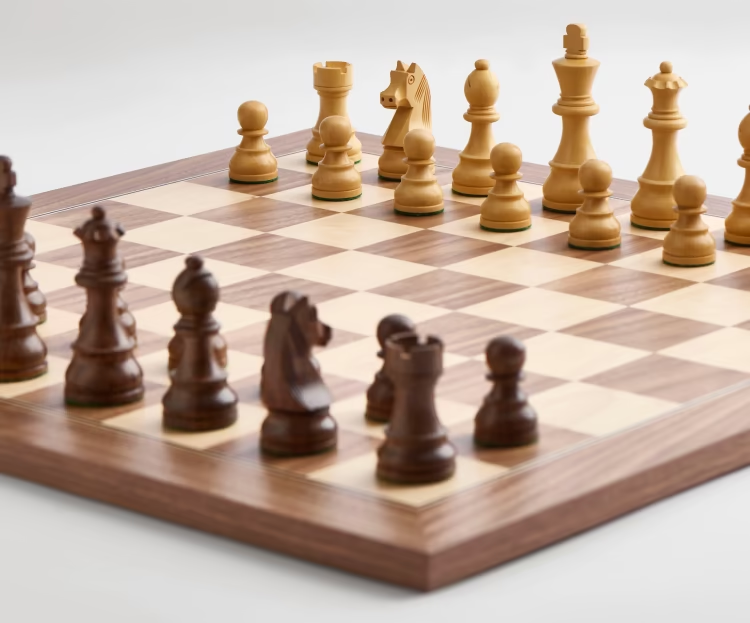
Chess is the reference point for long-term strategic planning. Every move needs to account for possible responses several turns ahead, and stronger players are constantly evaluating positions rather than just reacting to the last move.
Pattern recognition plays a big role too - recognizing a developing tactic, a weak pawn structure, or a familiar endgame shape speeds up decisions considerably. Predicting an opponent's plan, and choosing moves that limit their options, matters as much as finding a strong move of your own.
Chess is a perfect-information game: both players see the entire board at all times. There's no hidden information to uncover - the challenge comes entirely from calculating possibilities and judging their consequences.
Best for: Long-term strategic planning
#3 Sudoku
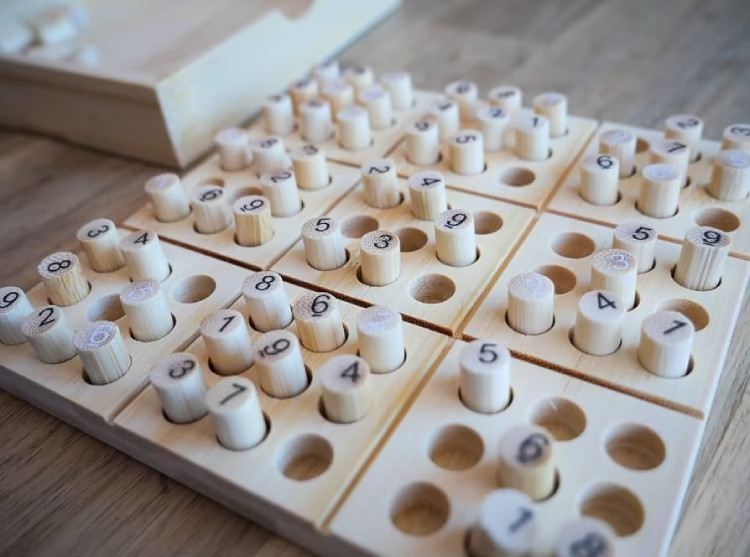
Sudoku is the purest logic entry on this list. Every puzzle can be solved through elimination: using the numbers already placed to work out which digits are impossible in a given cell, until only one answer remains.
There's no opponent, no hidden information, and no bluffing - just a structured problem to work through step by step. Pattern recognition helps you spot constraints faster, but the challenge comes entirely from the puzzle itself, not from predicting another player.
Best for: Pure logical reasoning
#4 Minesweeper
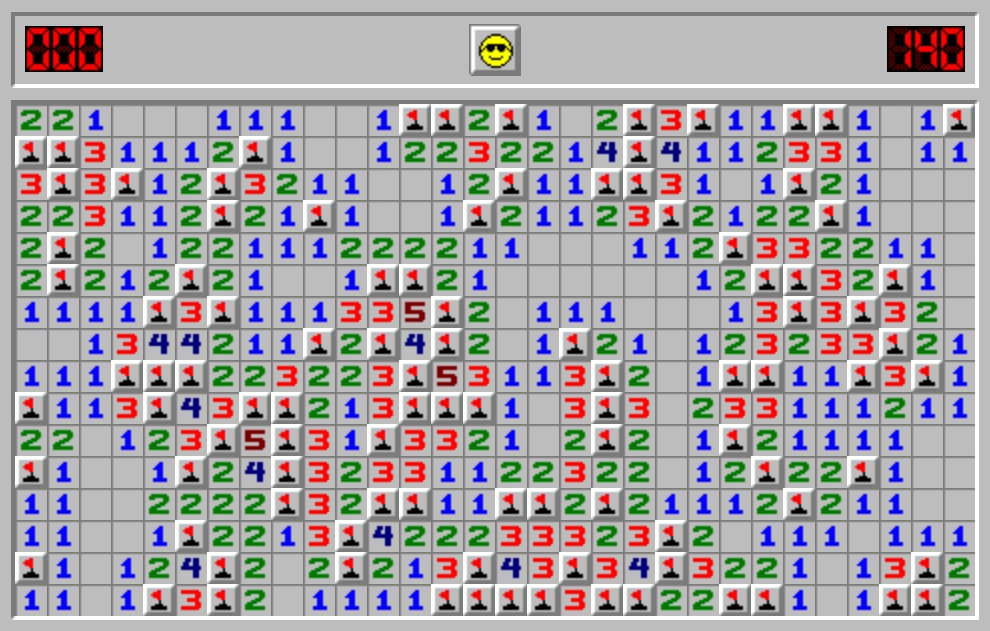
Minesweeper is a good example of deduction from limited information. Every number on the board is a clue about what's nearby, and part of the challenge is working out which unopened cells are safe based on those clues.
Eliminating impossible locations and recognizing how numbers overlap both matter here. Not every position can be solved through pure logic, though - some situations genuinely come down to a guess, so it's worth being honest that Minesweeper isn't always a perfectly solvable puzzle.
Best for: Deduction from limited information
#5 Among Us
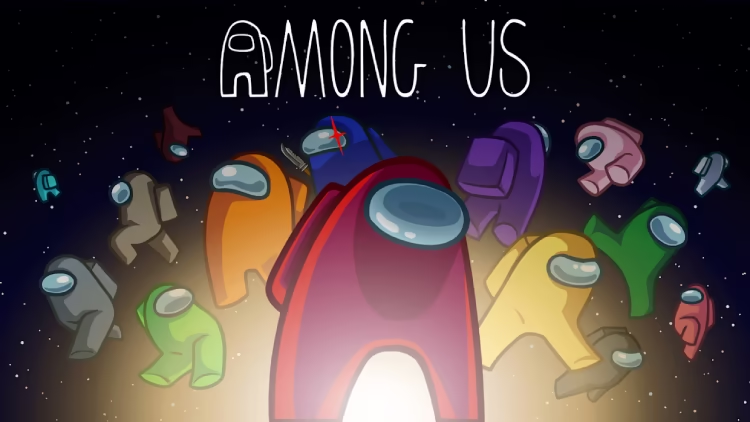
Among Us shifts the focus toward social deduction. Instead of reading a board, you're remembering where people were, what they said, and whether their story lines up with what you saw.
Comparing accounts, noticing contradictions, and deciding who's actually trustworthy is most of the game. Bluffing matters directly if you're the Impostor - you have to predict how others will react to what you say and adjust your story accordingly.
The key difference from Sudoku or Chess is that other players can deliberately mislead you. That turns deduction into something closer to reading people than solving a fixed puzzle.
Best for: Social deduction and reading other players
Why Alibi Tops This List
Chess emphasizes planning. Sudoku emphasizes elimination. Minesweeper emphasizes deduction from limited clues. Among Us emphasizes memory and social deduction. Alibi is ranked first here because it asks for most of these at once - memory, deduction, planning, and prediction, all under hidden information - not because it's objectively harder or smarter than the others.
How They Compare
| Game | Main Skills | Hidden Information | Planning Ahead | Multiplayer |
|---|---|---|---|---|
| Alibi | Memory, deduction, planning, prediction | Yes | Yes | Yes (humans or bots) |
| Chess | Planning, calculation, pattern recognition | No | Yes | Yes |
| Sudoku | Logical elimination, pattern recognition | No | Limited | No |
| Minesweeper | Deduction, probability | Yes | Limited | No |
| Among Us | Memory, social deduction, bluffing | Yes | Limited | Yes |
Final Thoughts
Different logic games test different kinds of thinking. Chess rewards calculation, Sudoku rewards elimination, Minesweeper rewards reading clues under uncertainty, and Among Us rewards understanding people rather than positions. Alibi sits in an unusual spot because it asks for several of these at once - memory, deduction, planning, and prediction, all under hidden information. If that combination sounds interesting, it's free to try directly in a browser.